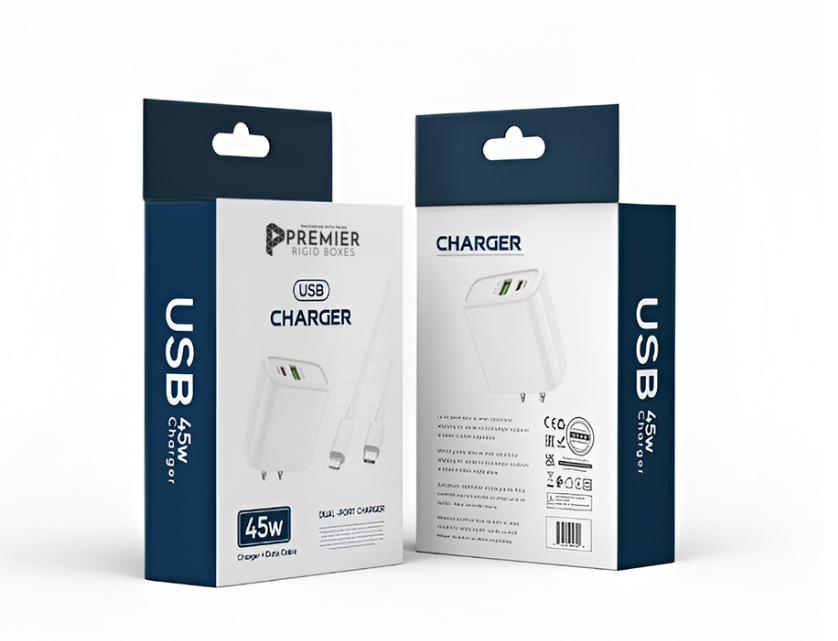
The mobile charger sits in an odd position in the world of electronics. Everyone needs one. Nearly no one
thinks about the box it comes in. You buy the bowl, rip open the plastic clamshell or the recycled cardboard sleeve, and within ten seconds, the packaging is in the caddy. The bowl goes into a hole or gets plugged into a wall. The box is forgotten.
That dynamic is about to change fully. In 2026, custom mobile charger boxes are evolving from simple protective cases into a commodity that is far more sophisticated, smart, sustainable, and strategically valuable for tech brands. The packaging is no longer just the thing you throw down. It’s getting the thing that keeps guests coming back.
Three Forces Reshaping Charger Packaging
Look at what’s passing across the packaging assiduity, and three distinct forces crop. Esko’s 2026 Packaging Trends report, released in late 2025, identifies these as sustainability, smart packaging driven by regulations like the Digital Product Passport, and the rapid-fire rise of agentic AI. For mobile charger boxes specifically, each of these forces is creating new openings and new prospects.
First, sustainability is no longer voluntary. Apple’s 2026 Environmental Progress Report confirms the direction the company has taken to exclude plastic from its packaging entirely, transitioning to 100 percent fibre- grounded packaging across retail bags, finished goods boxes, and appurtenant packaging. What Apple does, the rest of the electronics industry follows. However, your packaging needs to meet this standard, or you’ll look outdated before the product even reaches the client if you’re a tech brand in 2026.
Alternatively, connected packaging is getting mainstream. The Global Connected Packaging Survey 2026 found that 81.2 percent of companies are now using connected packaging technologies, up from 72.6 percent the previous time. QR codes and NFC markers used together are now used by 47.1 percent of adopters. A bowl box with a scannable label is no longer a novelty. It’s an anticipation.
Third, the request is consolidating around plastic-free results. According to Fact.MR’s 2026 analysis estimates the global plastic-free packaging for IT accessories market at USD 762.2 million and projects it to grow at 6.6 percent annually through 2036. Molded fiber and pulp presently hold a 39.1 percent share of this request, with folding cartons accounting for 35 percent. The communication is clear. Fiber-grounded, recyclable, and biodegradable accouterments are the new birth.
Beyond the Box: What Smart Packaging Actually Does
Let me be specific about what these changes mean for a custom mobile charger box in 2026. The box itself is still a box. It still protects the charger during shipping. It still displays branding and product information. But now it also has several other effects.
A smart charger box contains a QR code or an NFC label embedded beneath the paper face. When the client scans it with their phone, they aren’t taken to a general product runner. They’re taken to an experience acclimatized to that specific charger and that specific moment. The Global Connected Packaging Survey found that 67.7 percent of companies now incorporate gamification elements into their connected packaging platforms, using mobile games, quizzes and trivia, and stoked reality gestures to engage guests.
Why does this matter for a chargerl? Because a charger is a product that people frequently buy and often forget about. The brand has no ongoing relationship with the client after the trade. Smart packaging changes that. The client scans the box, registers the product, and suddenly the brand has a direct channel for firmware updates, bond information, and unborn elevations. The packaging becomes the ground between a one- time sale and an ongoing relationship.
What Consumers Actually Want
The data support this shift. According to the connected packaging check, respondents cited data collection (60.9 percent), nonsupervisory compliance similar to digital product passports (60.7 percent), sustainability (60.4 percent), marketing and client loyalty (60.2 percent), and consumer engagement (57.8 percent) as crucial drivers for relinquishment. These aren’t niche enterprises. They’re mainstream prospects.
Consider the illustration of Belkin’s Nintendo Switch, unveiled at CES 2026. This charging case features an integrated 10,000 mAh power bank, a TV screen showing real-time battery status, and hidden chambers for AirTag or Tile shadowing. The packaging for such a product can not be an afterthought. It must communicate the same position of complication as the product outside.
The Material Shift: Molded Fiber and Paper Pulp
The physical accouterments of charger boxes are changing just as dramatically as their digital capabilities. Molded fiber and pulp now lead the pack in plastic-free packaging for IT accessories, driven by their balance of protection, recyclability, and scalability. These accouterments aren’t the flimsy egg-tinderbox pulp of history. ultramodern molded fiber can be finagled with precision, custom silhouettes that grip a charger impeccably, and smooth shells that take high-quality printing.
The shift is being driven by three factors. First, nonsupervisory pressure is increasing worldwide. Second, commercial ESG commitments are forcing brands to reduce plastic across their supply chains. Third, e-commerce shipments of IT accessories have surged, and molded fiber handles the adversities of last-mile delivery better than numerous others
What this means for custom mobile charger boxes in 2026 is that brands have choices they didn’t have five times agone. You can specify molded fiber inserts that hold the charger securely without plastic fester packs. You can use folding cartons made from 100 percent post-consumer recycled board. You can exclude froth, shrink wrap, and plastic windows entirely. The result is packaging that looks and feels decorative while meeting the strictest sustainability norms.
The Digital Product Passport
One of the most significant developments for 2026 is the Digital Product Passport( DPP). Esko’s trends report identifies DPP as a crucial non-supervisory driver of smart packaging abandonment. For charger boxes, this means each package can carry a unique identifier, generally a QR code or NFC label, that links to a digital record containing information about the product’s accouterments, origin, recyclability, and end-of-life instructions.
This isn’t just a compliance exercise. It’s a brand occasion. A client who scans a charger box and sees a detailed breakdown of its environmental impact, including the recycled content chance and the carbon footprint of manufacturing, is a client who trusts that brand more. Translucency builds fidelity. And in 2026, with 92.3 percent of assiduity professionals believing connected packaging will grow in significance, brands that ignore DPP are falling behind.
Gamification and Post-Purchase Engagement
The most intriguing development in connected packaging is the rise of gamification. The Global Connected Packaging Survey found that the use of game-based rudiments has expanded to 67.7 percent of juggernauts, up from 59 percent in 2025. The primary objectives are promoting new products or services (47.2 percent), gathering consumer perceptions (23.4 percent), and building brand mindfulness (17.7 percent).
For a charger brand, this presents a clear occasion. The box arrives. The client opens it and scans the law. They’re taken to a simple interactive experience a quiz about charging habits, a spin- to- palm wheel for a reduction on unborn purchases, and a tutorial videotape that helps them get the most out of the product. These aren’t gimmicks. They’re data collection mechanisms wrapped in entertainment. Each commerce tells the brand’s product about the client’s preferences, position, and engagement level, while the client walks away feeling entertained and valued.
The Don Simon beverage brand crusade offers a model. They used QR codes on packaging to direct guests to sustainability- themed games and quizzes. druggies collected points, changed them for tickets, and won prizes. What started as a PR trouble converted into a direct consumer relationship. A charger brand can do the same checkup, the box, register the product, earn points toward an unborn purchase, and conclude with dispatches. The box becomes a client accession channel.
What This Means for Custom Design
For a tech brand commissioning custom mobile boxes in 2026, the design process has changed. You’re no longer choosing between a cardboard sleeve and a rigid box based solely on cost. You’re forming opinions on digital integration, material sustainability, and post-purchase engagement at the same time.
The physical design must accommodate a scannable law, typically a QR code, either published directly on the box or hidden beneath a gash-down marker. The material choice affects both the environmental messaging and the print quality for that law. Molded fiber is used for publishing other than carpeted paperboard, so your design team needs to test beforehand. The structural design must protect the charger during shipping while minimizing material use, as every gram of weight adds to the carbon footprint and shipping costs.
The DIELINE’s 2026 Trend Report identifies several aesthetic directions that align with these functional conditions.” Rich, Not elitist” describes ultraexpensive packaging that feels luxurious but approachable, using high-end accouterments and elevated homestretches without the nippiness traditionally associated with luxury. For a charger box, this could mean a soft- touch matte finish, subtle embossing, and warm neutral colors that communicate quality without crying.” Clinical With Soul,” a trend driven largely by Korean beauty and heartiness packaging, combines clean lines and functional claims with soft accentuations that keep the wisdom approachable. A charger box that looks precise and secure, yet not sterile, is exactly what numerous tech brands need.
Final Thought
That’s what all of this means for someone actually ordering buy mobile charger boxes in 2026. You need to ask your packaging supplier specific questions that were inapplicable three times ago. Can they reference 100 percent reclaimed rigid board? Can they produce molded fiber inserts to your specifications? Can they integrate QR codes or NFC markers without compromising recyclability? Can they provide an attestation of compliance with the Digital Product Passport?
The answers to these questions will separate the suppliers who are ready for 2026 from those who are still operating in 2023. The request is moving presto. The plastic-free packaging market for IT accessories is currently 762 million and projected to reach 1.44 billion by 2036. The brands that get ahead of this wind will have a competitive advantage. Those who stay will be playing catch- up.